
Jefferson County Probate Records Scope
Idaho's court structure places probate, wills and estates, guardianships, and conservatorships in the Magistrate Division of the District Court. Jefferson County does not have a separate probate court building in the research file. The local court office at 210 Courthouse Way, Suite 120, Rigby, ID 83442 is the court contact for probate case access, and the court phone line is 208-745-6313 option 3.
Probate records can include petitions to probate a will, estate administration filings, notices, orders appointing a personal representative, letters, inventories, creditor notices, accountings, final orders, guardianship petitions, conservatorship petitions, annual reports, and related motions. A public search may show case status and hearings, but full document access is not guaranteed online.
The manifest image from the Idaho Judicial Branch court structure page shows why Jefferson County probate records are treated as Magistrate Division matters.
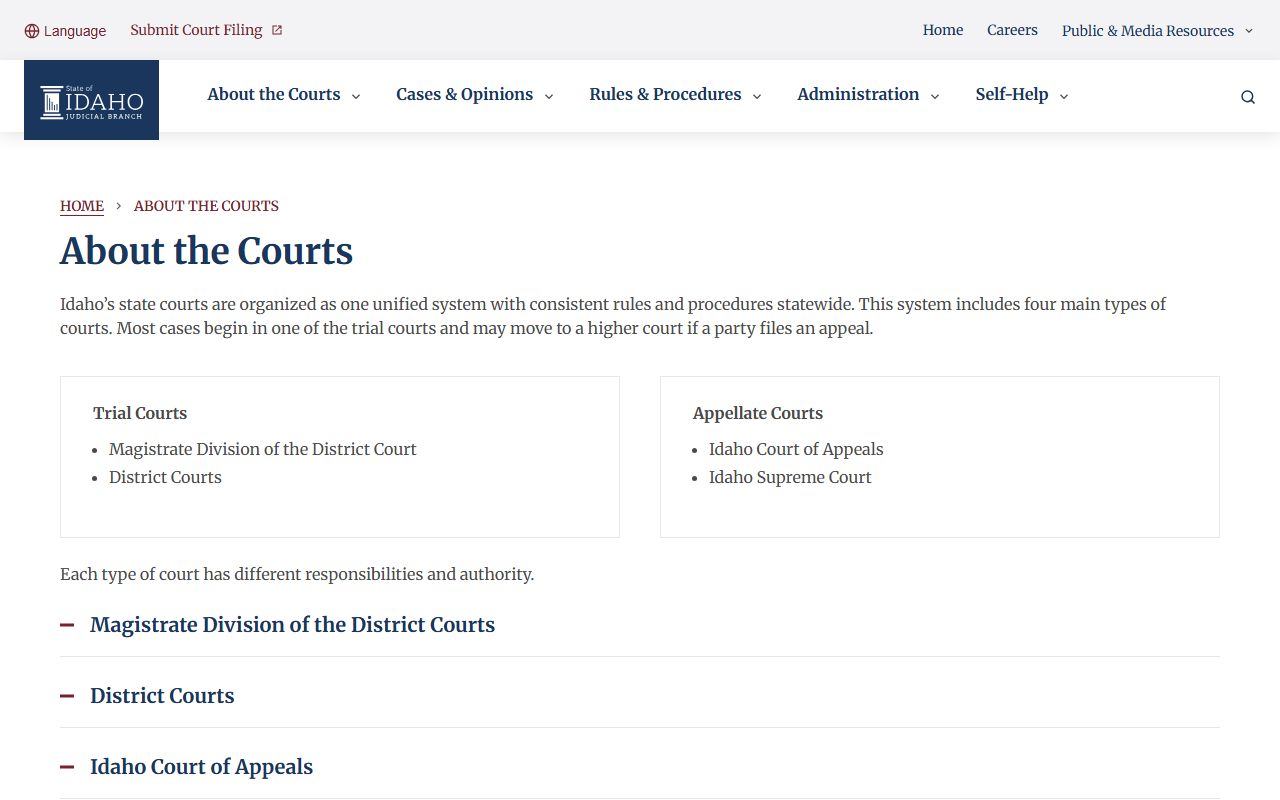
That state court structure is the basis for routing Jefferson County estate and protected-person matters through the local court office.
Jefferson County Probate Terms
Probate files use terms that are easy to confuse. These definitions are plain-English labels for common filing roles and case types in Jefferson County probate records.
- Testator
- A person who made a will before death.
- Personal representative
- The person appointed by the court to administer an estate. Some older forms or common speech may say executor.
- Intestate
- A death without a valid will, so estate administration follows Idaho law and court orders.
- Guardianship
- A case asking the court to appoint a person to make care or personal decisions for a minor or protected person.
- Conservatorship
- A case asking the court to appoint a person to manage money or property for a protected person.
Search Jefferson County Probate Records
Start with the Idaho iCourt Portal for case status and hearing search. The Idaho Judicial Branch says general case information is available through iCourt, while case records are obtained through a courthouse kiosk or a request to the clerk's office where the case was filed. Jefferson County's FAQ also says some documents may be viewable on the kiosk computer in the Court Clerk lobby depending on case year and security settings.
- Search iCourt for a probate case name, party name, or hearing if the case is indexed publicly.
- If a document is needed, use the Jefferson County Court Record Request Form for copies, examination, documents, or audio.
- Include the case number, file type, document date, exact document name, relationship to the case, and return method when known.
- Use the courthouse kiosk in the Court Clerk lobby if the record is available there and not blocked by security settings.
- Expect judge review when a sealed file, minor, or protected-person issue affects access.
Jefferson County Probate Court Contact
The probate contact point is the Jefferson County Courts office, not a stand-alone probate registry. The same court office handles the local court record request process for probate copies and certified documents.
Jefferson County Courts
210 Courthouse Way, Suite 120
Rigby, ID 83442
208-745-6313 option 3
Monday-Friday, 9 a.m.-5 p.m.; filings after 4 p.m. processed next business day
Note: Staff can explain filing and record request channels, but they cannot provide legal advice for estate or guardianship decisions.
Jefferson County Probate Copy Fees
The research did not locate a Jefferson County-specific probate filing fee table or local probate packet. For records access, the court copy and certification fees are confirmed through the court FAQ and request process. Use these fees for existing probate documents, and confirm new filing fees with the court before filing.
| Item | Amount or Status |
|---|---|
| Probate filing fee schedule | Not found in official county research |
| Plain court copy | $1 per page |
| Certification when clerk makes the copy | $1 per certification |
| Verification of requester-provided copy | $0.50 per page, then $1 certification |
| First audio CD from court record request form | $10 |
| Each additional audio CD | $5 |
What Jefferson County Probate Records Show
Probate records may show who filed the case, the decedent or protected person, the type of petition, court hearing activity, orders, letters, inventories, creditor notice activity, accountings, final distribution, and motions. Guardianship and conservatorship records may include annual reporting and financial or care information that is more sensitive than an ordinary estate docket.
Access is controlled by Idaho court record rules. The manifest image from the Idaho Court Administrative Rules page points to the court-record framework that governs public access.
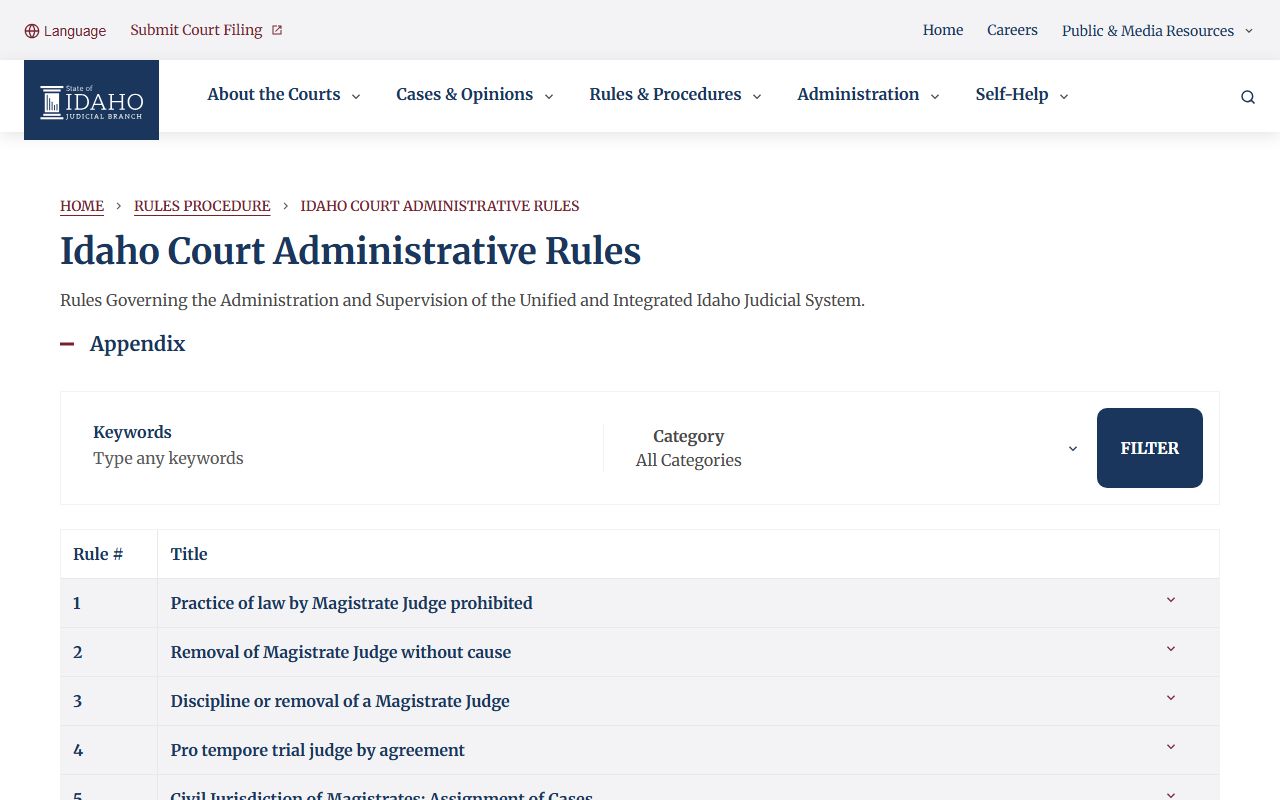
For Jefferson County probate records, those rules matter because a case can exist while some events or documents stay outside public view.
Restricted Jefferson County Probate Records
Not all Jefferson County probate records are open in the same way. Records involving minors, protected persons, medical details, financial identifiers, sealed filings, or confidential events may be restricted under Idaho Court Administrative Rule 32 and related court rules. The county record request form even includes a "Record is Sealed" checkbox and response options for denial or partial denial.
The judge approval rule is especially important. Jefferson County says sealed cases or cases with minor children require judge approval before copies are released. In a guardianship or conservatorship file, that review can affect what the public sees. The public iCourt Portal may omit sealed cases or sealed events, and some kiosk documents may be blocked by Supreme Court security settings.
Juvenile expungement is not probate, but the manifest assigns a related restriction image from Idaho Code 20-525A, which reinforces Idaho's stricter treatment of youth-related court records.
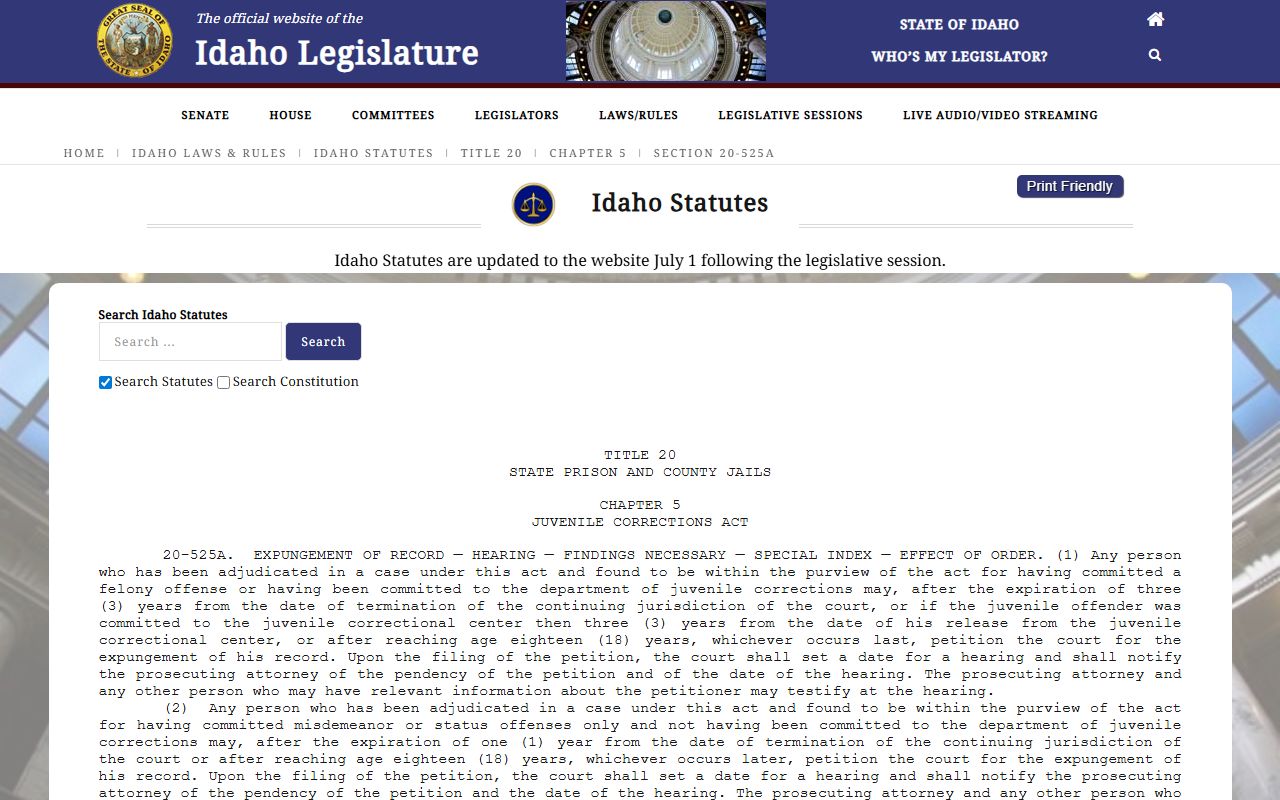
That restriction context is relevant when probate records involve minors or protected persons, even though estate records and juvenile records are separate case types.